

Frequently Asked Questions
SHN Hospice at Home nursing care
What conditions do you cover?
We care for patients with illnesses that no longer respond to curative treatment. This can include, but is not limited to, cancer, motor neurone disease, chronic obstructive pulmonary disease (COPD), heart disease and dementia in crisis.
What can I expect SHN to do during a visit?
What we provide on each visit very much depends on the needs of individual patients and their families. Our nursing team can help assess needs, manage symptoms and administer medication. We will also offer personal care (such as washing, dressing) and respite day and night stays so that you/your family can have some rest or attend an appointment. While our care is focused on our patients, we are also here to support your family, both practically and emotionally. We can’t do things like household cleaning or shopping but we can try to find services that can help with this if needed.
Who else might be involved?
Your GP, district nurses and carers will be involved along with the specialist palliative care team if required. Your GP will still oversee your care and medications along and we will liaise with them regularly to ensure the care is seamless.
What is the difference between a nurse and a healthcare assistant?
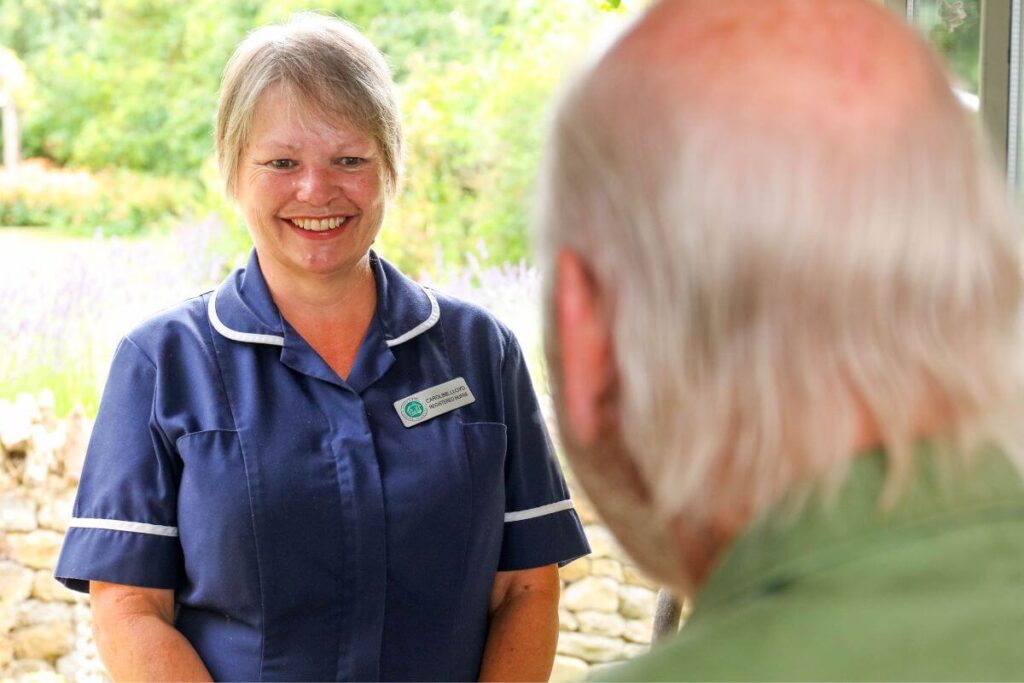
Our nurses and healthcare assistants are all experienced in palliative care. Nurses will administer medication, manage symptoms and carry out any treatments or procedures. Our healthcare assistants often work alongside the nurses, providing support with personal care.
What equipment will I need?
We can suggest any equipment we feel would be of benefit such as a hospital bed or walking aids and we can liaise with the district nurses, occupational therapists and physiotherapists on your behalf. It will normally be the district nurse that arranges for the equipment to be supplied by the NHS.
Will my pain be managed?
Yes, we assess our patients’ pain at each visit. Although we cannot change prescriptions, GPs often prescribe medication for symptom control with a range rather than a specific dose and our experienced nurses can adjust the dose appropriately.
Emotional Support
Who is eligible for SHN counselling services?
Any adults living in our geographic area are eligible for our bereavement counselling service, even if you have no prior relationship with Shipston Home Nursing. Unfortunately we are unable to provide counselling for children but can help you to find suitable support.
How do I access bereavement counselling?
You can self-refer by contacting our team on 01608 664850 or by emailing us at [email protected]. You can also be referred to us via your GP or other health professional.
Do you provide counselling for children?
In some circumstances we are able to offer counselling for under 18s. Please contact us for further information. We can also suggest other hospices or charities that specialise in supporting children through bereavement.
I’m concerned about my relative/friend. How do I know whether to recommend bereavement counselling?
We have put together a guide on how to support yourself and others through the grieving process, which includes signs that suggest that counselling may be helpful. If you’re concerned that their needs are becoming more urgent or complex, please contact our team for advice.
General queries
What is the difference between a ‘hospice at home’ service and a traditional hospice?
A hospice is typically an in-patient unit where care is provided for respite, symptom control and, in some cases, to support patients until they die. A hospice at home service like Shipston Home Nursing provides similar care to a traditional hospice but in the patient’s home, often closer to their families and loved ones and with more flexibility.
Who is responsible for my care?
Your General Practitioner (GP) has overall responsibility for your care but will often engage with, or signpost to other agencies which provide general or specialist additional care. The District and Community Nursing teams are part of the NHS and work closely with GP Surgeries and other healthcare providers. If a need for additional care is identified, which is outside the scope of the District Nurses, they will make a referral on your behalf to other services such as Community Nurse Specialists, Occupational Therapists, Physiotherapist and other agencies, for example Macmillan, Marie Curie or ourselves.
How is Shipston Home Nursing funded?
Like other hospices, we are a charity and most of our funding comes from generous donations, grants and fundraising activity. Currently the NHS funds 6% of our overall costs and we raise the rest with your help. Fundraising to cover our costs is a constant challenge but we are usually able to support everyone that needs us and is eligible for our care.
How can I support Shipston Home Nursing?
We’d love you to get involved in supporting our services. Instant one-off and regular donations can be made directly through our online donation page. You can also get involved in our events, create your own fundraising activity or join our wonderful group of volunteers. Take a look at our Support Us page for ideas and alternate ways to donate – and thank you for your support!